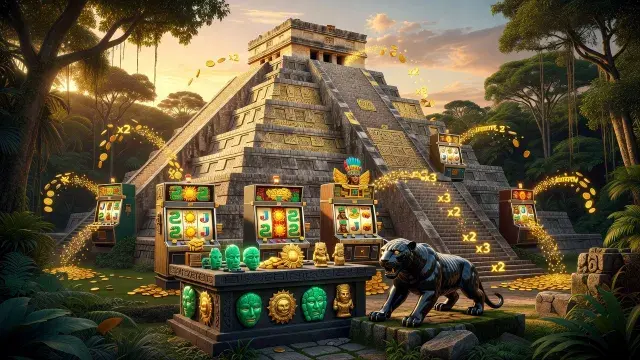

A jaguar carved from obsidian, a temple stairway soaked in gold leaf, a calendar stone that predicted the fate of an empire - these images did not fade with the fall of Tenochtitlan. They migrated into slot reels, where they now generate some of the most consistent payout structures in the online casino catalog. That migration was not accidental. Game designers found in Aztec iconography a rare combination: instantly recognizable symbols, a built-in narrative of hidden wealth, and enough visual density to justify elaborate bonus mechanics.
What separates a well-built Aztec slot from a lazy reskin is math, not mythology. Behind every stone-carved wild symbol sits a return-to-player percentage that determines whether the theme is decoration or substance. Players chasing Aztec gold rewards are, whether they realize it or not, evaluating volatility curves and hit frequencies dressed up as pyramids. For readers who want a concrete starting point rather than abstract theory, the treasures of aztec rtp title offers a useful reference for how these mechanics play out in a live game environment. This article breaks down why the Aztec theme endures, how RTP actually functions inside these games, and what separates genuine value from marketing gloss.
The Cultural Appeal Behind Aztec-Themed Slots
Aztec civilization occupies a specific niche in popular imagination: advanced, wealthy, and abruptly erased. That combination - sophistication paired with mystery - gives designers a visual and narrative toolkit that few other themes match. Egyptian slots rely on similar logic, but Aztec titles carry a sharper edge of danger, tied to conquest, sacrifice, and lost cities swallowed by jungle.
Why Ancient Civilizations Sell Slot Themes
Players respond to themes that promise a reward hidden behind risk. Ancient civilization slots frame every spin as an expedition, not just a bet. The Aztec setting intensifies this because the historical record itself centers on gold - conquistadors documented obsessive fixation on Aztec treasures, and that documented greed translates directly into game design logic centuries later.
Visual and Symbolic Elements That Define the Genre
Classic Aztec-themed slots draw from a consistent visual vocabulary: stepped pyramids, feathered serpents, sun stones, jade masks, and tribal warriors. These symbols are not interchangeable decoration. Designers assign higher-paying roles to the most culturally loaded icons - the sun stone or the ruler's mask typically sits above lower-tier card symbols in the paytable, reinforcing the sense that rarity and value are linked.
How Mythology Translates Into Bonus Mechanics
Aztec mythology involves layered cosmology - multiple suns, underworld journeys, calendar cycles - and slot designers mine this structure for bonus rounds. A free-spins feature themed around "unlocking the temple" or "awakening the sun god" is not arbitrary flavor text; it mirrors an actual narrative arc, giving the bonus round a sense of progression rather than random repetition.
- Recurring symbols: pyramids, serpents, sacrificial altars, gold idols
- Common bonus themes: temple exploration, treasure chambers, ritual unlocking sequences
- Narrative hook: a lost civilization whose wealth was never fully recovered
Understanding RTP in Aztec Slot Games
Return to player is the single most important technical figure attached to any slot, and Aztec RTP games are no exception to that rule. RTP represents the theoretical percentage of wagered money a game returns to players over a very large number of spins. It is a long-run statistical average, not a promise for any individual session.
What RTP Actually Measures
An RTP of 96% means that, across millions of spins, the game is designed to return 96 cents for every dollar wagered, with the remainder retained as house edge. This figure is calculated by the game's mathematical model before release and verified through testing, not adjusted session by session based on a player's luck or losses.
Why RTP Percentages Vary Between Aztec Titles
Not all Aztec-themed slots share identical RTP values. Differences stem from volatility design choices: a high-volatility temple-themed slot might sit at a slightly lower RTP but pay out in large, infrequent bursts, while a low-volatility title offers smaller, more frequent wins at a marginally higher RTP. Publishers also adjust RTP across different game versions distributed to different markets, so the same title can technically carry more than one certified RTP figure.
Reading RTP Alongside Volatility and Hit Frequency
RTP alone tells an incomplete story. A 97% RTP slot with extreme volatility can still produce long losing streaks before a single large payout evens the average. Players serious about RTP slot treasures should look at three figures together - RTP, volatility rating, and hit frequency - rather than treating RTP as a standalone guarantee of profitability.
- RTP: long-term average return percentage
- Volatility: size and frequency distribution of wins
- Hit frequency: how often any winning combination lands, regardless of size
Classic Aztec-Themed Slots Worth Knowing
The genre has matured over roughly two decades, moving from simple three-reel machines to elaborate five-reel video slots with cascading mechanics and layered bonus structures. Recognizing the classic titles helps newer players understand which design conventions became industry standards.
Early Foundational Titles
The first wave of Aztec slots leaned on straightforward mechanics - standard paylines, simple wild substitutions, and a single free-spins bonus. These games established the visual template still used today: gold-heavy color palettes, stone-textured reels, and tribal drumbeats as background audio.
Modern Evolutions of the Classic Formula
Contemporary Aztec-themed slots layer in cascading reels, multiplier trails, and expanding wilds that "climb" temple steps as a visual metaphor for progression. These mechanical additions increase engagement without abandoning the core theme, proving that classic Aztec-themed slots can evolve mechanically while staying visually anchored to their origins.
What Distinguishes a Well-Designed Title From a Generic One
The strongest titles integrate theme and mechanic rather than pasting Aztec art onto a generic template. A gold-idol bonus round that actually multiplies stacked treasure symbols feels earned; a bonus round with no thematic connection to its trigger feels bolted on. Players can often spot the difference within the first few spins based on how the bonus round is framed and animated.
Chasing Aztec Gold Rewards: Bonus Features and Payouts
Bonus structures are where Aztec slots differentiate themselves most sharply from one another. The theme's built-in narrative - a hidden treasure waiting to be uncovered - maps naturally onto bonus round design, giving players a reason to pursue Aztec gold rewards beyond the base game's standard payline wins.
Free Spins and Multiplier Mechanics
Most Aztec slots trigger free spins through scatter symbols, typically the sun stone or a golden mask. During these rounds, multipliers frequently increase with each consecutive win, occasionally stacking into significant totals by the final spin. This escalating structure keeps engagement high through the bonus round rather than front-loading all excitement into the trigger moment.
Progressive Jackpots Tied to the Aztec Theme
Some titles link Aztec-themed slots to progressive jackpot networks, where a small percentage of every wager across connected machines feeds a shared prize pool. These jackpots can grow substantially before being won, and they are marketed heavily around the theme's own promise of undiscovered wealth - the jackpot becomes a literal stand-in for the lost city's treasure.
Bonus Buy Features and Their Trade-Offs
A number of modern Aztec titles allow players to purchase direct entry into the bonus round rather than waiting for a natural trigger. This convenience carries a cost: the purchase price is calculated to reflect the bonus round's average value, meaning it does not offer better odds, only faster access. Players should treat bonus buy options as a time-saving mechanism, not a mathematical advantage.
Evaluating Aztec RTP Games Before You Play
Choosing among dozens of similarly themed titles requires more than aesthetic preference. A methodical approach to evaluating Aztec RTP games protects both bankroll and enjoyment over time.
Checking Certified RTP Figures
Reputable developers publish RTP figures directly in the game's information panel, usually accessible through an in-game menu. Independent testing labs certify these numbers before a title reaches licensed casinos, so a published RTP should match certified documentation rather than promotional claims made elsewhere.
Comparing Volatility Ratings Across Titles
Two Aztec slots can share nearly identical RTP figures yet feel completely different to play, because volatility governs the player experience far more than the raw RTP number. Low-volatility titles suit players who prefer steady, smaller wins; high-volatility titles suit players chasing large, rarer payouts and who can tolerate longer dry spells between wins.
Setting Realistic Expectations for Session Play
RTP describes millions of spins, not a single ten-minute session. A player betting for twenty minutes on a 96% RTP game can still walk away significantly up or down purely due to short-term variance. Understanding this distinction prevents the common mistake of judging a game's fairness based on one unlucky or lucky session.
- Confirm RTP through the game's official paytable or info screen
- Match volatility level to personal bankroll and risk tolerance
- Treat any single session as a small sample, not a verdict on the game
Frequently Asked Questions
What RTP percentage should I look for in an Aztec slot?
Look for titles at or above 96%, which is generally considered a solid baseline in the current market. Anything below 94% is comparatively weak and reduces long-term value regardless of theme quality.
Do higher volatility Aztec slots pay out more overall?
Not necessarily - volatility affects how winnings are distributed over time, not the total amount returned. A high-volatility game can carry the same RTP as a low-volatility one but deliver wins in fewer, larger bursts instead of frequent smaller ones.
Are progressive jackpots in Aztec-themed slots harder to win?
Yes, progressive jackpots are typically rarer by design because a portion of every wager across the network feeds the growing prize pool. Base RTP on these titles is often slightly lower to account for the jackpot contribution.
Is buying a bonus round in an Aztec slot a good strategy?
It is a convenience feature rather than a strategic edge. The purchase price is calculated to reflect the bonus round's statistical value, so it does not improve overall odds - it simply removes the wait for a natural trigger.
Can I trust the RTP figures listed in a slot's paytable?
Yes, provided the game is licensed and distributed through a regulated casino platform, since independent testing labs certify RTP figures before release. Always cross-check the in-game figure against the developer's official documentation if it seems inconsistent.
Why do so many slot developers keep returning to the Aztec theme?
The theme combines strong visual identity with a built-in narrative of hidden wealth, which maps naturally onto bonus round design and jackpot marketing. That narrative flexibility makes it easier to justify elaborate mechanics without the theme feeling disconnected from gameplay.