Email accounts have quietly become one of the most valuable digital assets a person or business can hold. Beyond simple messaging, they serve as gateways to platform registrations, client communications, marketing operations, and identity verification across dozens of services. Yahoo Mail occupies a particular position in this landscape - it is one of the few major email platforms with decades of continuous operation, widespread international recognition, and broad acceptance across third-party services that newer providers sometimes lack.
For professionals managing multiple accounts, digital marketers running outreach campaigns, or business owners who need reliable secondary inboxes without the friction of manual setup, the option to purchase Yahoo mail accounts through established channels has become a practical solution rather than a fringe activity. Platforms where you can buy yahoo email accounts - such as accsmarket.com/en/catalog/drugie-pochty/yahoocom - have grown more structured and reliable, offering clearly defined account types with documented specifications and delivery guarantees.
What separates successful buyers from those who encounter problems is not simply where they shop, but how they evaluate sellers, what they do the moment accounts are received, and how consistently they maintain security afterward. This guide covers each of those stages in full - from understanding the account marketplace and vetting Yahoo account sellers, to locking down your secure Yahoo inboxes and keeping multiple accounts organized over the long term.
Understanding the Market for Yahoo Mail Accounts
The market for pre-created email accounts exists because manual registration at scale is genuinely slow, often blocked by platform verification requirements, and increasingly restricted by IP-based rate limiting. Yahoo, like most major email providers, places friction on bulk account creation to reduce spam - which means that for users who legitimately need multiple inboxes quickly, sourcing accounts from Yahoo account sellers is often the most efficient route.
Demand comes from several distinct user types. Digital marketers need verified addresses to register on platforms that require email confirmation. Developers and QA engineers need test accounts for application builds. Business operators want separate inboxes for different departments, clients, or regions. Each use case has different requirements in terms of account age, verification status, and activity history.
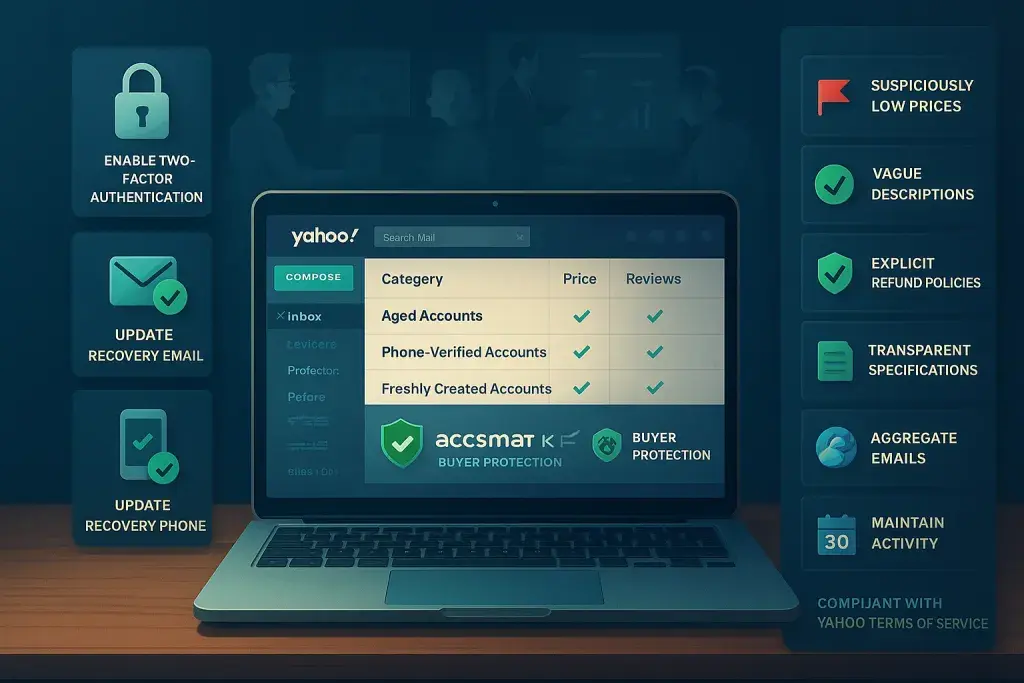
The accounts available in this market fall into a few clear categories. Aged accounts - those created months or years before purchase - carry an activity history that makes them appear more credible to third-party platforms. Freshly created accounts lack that history but cost less and are suitable for lower-stakes tasks. Phone-verified accounts carry stronger credibility signals than those created without SMS confirmation. Understanding these distinctions is the starting point for any informed purchasing decision.
| Account Type | Best Use Case | Relative Cost | Risk Level |
|---|---|---|---|
| Aged accounts (several months or older) | Platform registration, outreach campaigns | Higher | Low when sourced from vetted sellers |
| Freshly created accounts | Testing environments, temporary inboxes | Lower | Moderate |
| Phone-verified accounts | High-trust platform sign-ups | Moderate to high | Low |
| Bulk account packages | Mass outreach, multi-channel campaigns | Variable | Higher without seller vetting |
Yahoo email sign-up services represent a related but distinct category. Rather than reselling existing accounts, these services automate or manually complete the Yahoo registration process on a buyer's behalf, delivering freshly created credentials. The resulting accounts have no prior history but are built to specification - language settings, regional configurations, and verification status can often be customized. Whether this approach or purchasing aged accounts is more appropriate depends entirely on the intended purpose.
How to Evaluate Yahoo Account Sellers Before Buying
The quality gap between reputable and unreliable Yahoo account sellers is significant. A good seller delivers functional, fully accessible accounts with accurate descriptions. A poor one delivers accounts that are already flagged, recycled from previous buyers, or described in ways that do not match reality. Learning to distinguish between the two before any money changes hands is the most important skill in this process.
Key Signals of a Legitimate Seller
Trustworthy sellers are transparent about what they are selling. Their product listings specify whether accounts are aged or fresh, phone-verified or not, and what format credentials will be delivered in. They state replacement or refund policies clearly rather than burying conditions in fine print. Customer reviews - particularly those from verified purchasers on the platform rather than anonymous testimonials on the seller's own page - provide a more reliable signal than any marketing claim.
- Detailed account specifications listed before purchase, including age, verification status, and activity history
- Replacement or refund policy stated explicitly with defined time windows
- Verified reviews from independent buyers on established marketplaces
- Secure payment processing with options that include buyer protection
- A working customer support channel with reasonable response times
- Clear explanation of how accounts were created or sourced
Red Flags to Avoid
Some warning signs are obvious; others are subtle. Prices that fall dramatically below the typical range for that account type are rarely a bargain - they usually signal accounts that are already compromised, previously sold to other buyers, or created through methods likely to trigger platform flags quickly. Sellers who accept only untraceable payment methods and offer no recourse for defective accounts are operating without accountability by design.
- No stated refund or replacement policy of any kind
- Prices dramatically lower than the typical market range for that account type
- Requests for payment exclusively through methods with no buyer protection
- No verifiable reviews or third-party platform ratings
- Vague, inconsistent, or contradictory account descriptions
- No accessible support contact or failure to respond to pre-purchase inquiries
Comparing Seller Platforms
Where you buy matters as much as who you buy from. Dedicated digital goods marketplaces that specialize in account sales tend to enforce seller standards, provide structured dispute resolution, and maintain ratings systems that create real accountability. Private seller websites offer no such infrastructure - you are relying entirely on the individual's integrity. Freelance service platforms sit somewhere in between: they offer some mediation capacity, but seller accountability varies considerably depending on the platform's policies and the seller's track record.
| Platform Type | Buyer Protection | Seller Accountability | Product Consistency |
|---|---|---|---|
| Dedicated digital goods marketplace | High | High | High |
| Freelance service platform | Moderate | Moderate | Moderate |
| Private seller website | Low | Variable | Variable |
Step-by-Step Guide to Safely Purchasing Yahoo Mail Accounts
Knowing what to look for in a seller is necessary preparation, but the transaction itself requires its own sequence of careful steps. Buyers who rush through this process - especially those acquiring accounts in volume - often discover problems only after replacement windows have closed. A structured approach from requirements definition through post-purchase verification prevents most of these outcomes.
Defining Your Requirements Before Purchase
Vague requirements lead to mismatched purchases. Before approaching any seller, determine exactly what you need. The number of accounts, verification type, intended use case, delivery format, and budget should all be clear in your mind before you read a single product listing. This discipline prevents impulsive decisions driven by price alone and ensures that what you pay for aligns with what you actually need.
- Determine the precise number of accounts required for your use case
- Decide whether phone verification is necessary for your intended platforms
- Establish whether aged accounts or freshly created ones better fit your purpose
- Set a realistic budget based on account type and quantity
- Confirm what credential delivery format you need (file type, field structure)
Completing the Transaction Securely
When you are ready to buy, protect yourself at the transaction level as carefully as you evaluated the seller. Use payment methods that include buyer protection wherever possible - these give you recourse if the delivered product does not match what was described. Avoid sharing personal information beyond what the transaction requires. Confirm delivery format and timeline before paying, and keep a complete record of the transaction including the product description as it appeared at the time of purchase.
- Choose a payment method that includes buyer protection
- Read and confirm the seller's replacement and refund terms before paying
- Verify the credential delivery format and expected delivery window
- Save all transaction records, including the product listing as described
- Test all accounts immediately upon receipt while still within the replacement window
Verifying Accounts Immediately After Receipt
Every account should be tested the moment credentials are delivered. Log in to each one, confirm full inbox access, and check for any existing security notices or unusual prompts that suggest the account has been flagged or is under review. Accounts that cannot be accessed or that immediately require additional verification steps beyond a normal login should be reported to the seller right away - not after you have attempted workarounds that may void the replacement policy.
- Log in to each account and confirm complete access without unexpected barriers
- Check for existing security flags, unusual prompts, or recovery lockouts
- Verify that the inbox can both send and receive messages
- Confirm that recovery options are accessible and can be updated
- Document any non-functional accounts and contact the seller within the stated replacement window
Securing Your Yahoo Inboxes After Acquisition
Receiving working accounts is only the beginning. The accounts you have just acquired still carry the security configuration of whoever created them, which means the original creator - or anyone else with prior access - could potentially regain entry unless you take deliberate steps to make these inboxes fully yours. This stage of the process is where many buyers make the most consequential mistakes, assuming that a functional login is the same as a secure one.
Changing Credentials and Recovery Information
The first action after confirming access should be changing the password. Choose something strong and unique to that account - reusing a password across multiple inboxes means a breach of one compromises all of them. Once the password is changed, update every recovery pathway: the recovery email address, the recovery phone number, and any secondary contact options. These changes effectively transfer security ownership from the account's original creator to you. Until they are made, your control of the account is fragile.
- Change the password to a strong, unique one immediately after first login
- Update the recovery email address to one you control directly
- Update the recovery phone number to your own
- Review connected devices and remove any you do not recognize
- Revoke third-party app access for any applications you did not authorize
Enabling Two-Factor Authentication
Two-factor authentication is the most effective single security improvement you can apply to any email account. Yahoo Mail supports authentication apps and SMS-based verification. Once enabled, a correct password alone is insufficient to gain entry - the second factor must also be provided. For anyone managing accounts used in business or marketing contexts, enabling two-factor authentication is not optional. The minor inconvenience of a second login step is vastly outweighed by the protection it provides against unauthorized access.
Monitoring Account Activity Regularly
Even well-secured accounts benefit from periodic review. Yahoo Mail's account security settings include a login activity log that shows recent access points, device types, and geographic locations. Reviewing this log occasionally - and particularly after any period when you have shared login credentials or accessed the account from an unfamiliar device - allows you to catch unauthorized access before it causes meaningful damage.
- Review recent login activity in Yahoo's account security settings at regular intervals
- Configure alerts for suspicious sign-in attempts where available
- Periodically audit connected apps and revoke permissions for any that are no longer needed
- Check sent and deleted folders for any messages you did not initiate
Managing Multiple Yahoo Email Inboxes Efficiently
For users who acquire Yahoo email addresses in volume, efficient management becomes a practical challenge in its own right. Ten inboxes monitored through separate browser tabs are exhausting to maintain. A hundred inboxes without an organizational system quickly become unworkable. The solution is not more time spent on email - it is a more deliberate infrastructure for handling it.
Using Email Clients and Aggregation Tools
Consolidating multiple Yahoo inboxes into a single email client is the most practical starting point for high-volume account management. Desktop applications like Mozilla Thunderbird support connections to multiple accounts simultaneously via IMAP, allowing you to monitor all inboxes, apply consistent filtering rules, and organize messages from a unified interface. This eliminates the inefficiency of switching between browser sessions and makes it far easier to apply consistent security and organizational practices across all accounts.
Organizing Inboxes with Folders and Filters
Yahoo Mail's folder and filter system is capable enough to handle sophisticated inbox organization when used intentionally. The mistake most users make is creating folders reactively rather than designing a structure before mail begins arriving. Define a naming convention first - whether that means organizing by client, campaign type, priority tier, or project - then build filters that automatically route incoming messages before they reach the general inbox. This removes the cognitive load of manual sorting and keeps each inbox purposeful.
- Define a folder naming convention before applying it to any account
- Create filters organized by sender type, subject keywords, or message origin
- Apply priority flags or markers to time-sensitive message categories
- Schedule fixed inbox review sessions rather than checking reactively throughout the day
- Archive messages you may need later rather than deleting them permanently
Maintaining Account Health Over Time
Yahoo has historically reclaimed accounts that show extended inactivity - typically measured in months without a login. For anyone managing accounts sourced through Yahoo email sign-up services that have no prior activity history, establishing a minimum engagement schedule from the start is essential. This does not require significant effort; periodic logins and occasional message activity are generally sufficient to keep accounts in good standing. What it does require is consistency.
- Log in to each account at least once every thirty days
- Send or receive at least occasional messages to maintain activity signals
- Keep password and recovery information current as your own contact details change
- Monitor for policy update notifications from Yahoo and act on any that require user response
Legal and Ethical Considerations When Acquiring Yahoo Email Addresses
Any responsible discussion of how to acquire Yahoo email addresses must address the legal and ethical dimensions directly rather than treating them as an afterthought. The practice of purchasing pre-created or service-built accounts sits in a space that is neither uniformly prohibited nor entirely without limits - and understanding those limits is what separates compliant, responsible use from activity that creates genuine legal exposure.
Yahoo's Terms of Service restrict certain types of account activity, including the use of automated systems to create accounts in bulk and the transfer of accounts in ways that facilitate prohibited activities. Buyers should read these terms not as a deterrent to legitimate use, but as a map of what is clearly off-limits. Using purchased accounts for unsolicited mass email campaigns, phishing, impersonation, or any form of platform manipulation violates both Yahoo's policies and, in most jurisdictions, applicable laws governing electronic communications.
The legitimate use cases for purchased accounts are real and numerous - separate inboxes for different business functions, authorized email outreach to consenting recipients, operational redundancy across departments, or development and testing environments. These uses are compatible with responsible account acquisition when accounts are properly secured, used in good faith, and managed in compliance with both platform policies and applicable law. Documentation of your acquisition process is worth maintaining in case of any future platform dispute.
- Review Yahoo's current Terms of Service before purchasing any accounts
- Use acquired accounts only for legally and ethically compliant purposes
- Ensure any email marketing activity complies with applicable anti-spam regulations in your region
- Avoid using purchased accounts for deception, unsolicited mass messaging, or platform manipulation
- Keep records of your account acquisition in case of disputes with the platform or seller
Questions and Answers
What is the difference between an aged Yahoo account and one from a sign-up service, and which should I choose?
An aged account has an existing history on Yahoo's platform - login records, sometimes prior usage - which makes it appear more established to third-party platforms that scrutinize new accounts. An account from a Yahoo email sign-up service is freshly created with no prior activity. If you need accounts to register on platforms that are sensitive to account age, aged accounts are the better choice. For testing or lower-stakes use cases, freshly created accounts are typically sufficient and less expensive.
How quickly should I change the password and recovery details after receiving a purchased account?
Immediately - before using the account for any other purpose. Until you update the password and replace the recovery email and phone number with your own, the original account creator retains the ability to regain access through standard recovery processes. This step is not optional; it is the action that transfers genuine security ownership of the inbox to you.
Can using multiple Yahoo accounts from the same device or IP address cause problems?
Logging into a small number of accounts from the same device is generally not problematic. However, accessing a large volume of accounts in rapid succession from a single IP address - particularly if combined with automated activity - can trigger Yahoo's security systems and result in account flags or temporary blocks. Users managing high volumes of accounts often distribute activity across separate sessions or use dedicated connection environments to avoid triggering these responses.
What should I do if an account stops working shortly after purchase?
Contact the seller immediately and within the stated replacement window. Provide evidence of the issue - a screenshot of the error or a description of what happens when you attempt to log in. Reputable sellers will replace non-functional accounts within the terms they stated at point of sale. If the seller is unresponsive and you paid through a method with buyer protection, initiate a dispute through that payment channel promptly rather than waiting.
Is there a practical limit to how many Yahoo inboxes one person can manage securely?
There is no fixed ceiling, but the realistic limit scales with your tooling. Managing a handful of accounts through a multi-account email client is straightforward. Managing dozens requires a more systematic approach to folder structure, filtering, and security auditing. Managing hundreds effectively requires automation infrastructure for routine tasks combined with consistent manual oversight for security-sensitive activities. The constraint is not Yahoo's platform - it is the consistency of your own maintenance practices across all accounts.